EN
English
中文
Русский

JSC Mosvodokanal

Moscow, Russia
Project background

Mosvodokanal (Moscow Waterworks) is the largest water utility in Russia. Moscow's sewage system processes wastewater generated within the city and its surrounding towns in the Moscow region. The main wastewater treatment plants are the Lyubertsy Wastewater Treatment Plant (LWWTP) and the Kuryanovo Wastewater Treatment Plant (KWWTP).

Objective

Since wastewater accounts for about half of the flow of the Moscow River, ecological considerations ruled out the use of chlorine for disinfection. A reliable technology was needed to meet sanitary and hygienic requirements without negatively impacting the environment of the Moscow region.

Equipment

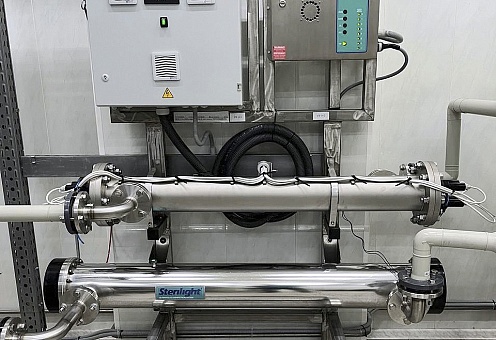
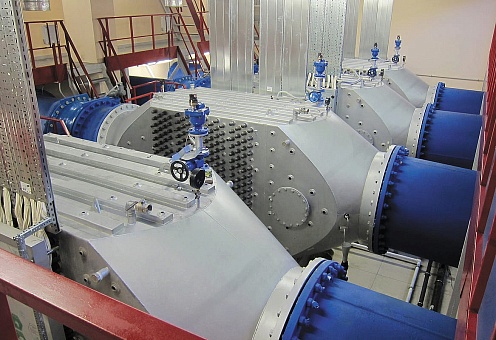
After evaluating various options, UV disinfection was proven to be effective in meeting sanitary standards, environmentally safe, and economically viable. For UV stations at LWWTP and KWWTP, open-channel equipment with vertically positioned UV lamps (ORINOCO Group) was used. This design allowed for a gravity-fed system without requiring additional pumping.

In 2007, the first UV station at LWWTP was commissioned with a capacity of 1.35 million m³/day., Between 2012 and 2013, the world's largest UV wastewater disinfection station was launched at KWWTP with a design capacity of 3.125 million m³/day. In 2023, a second UV station at LWWTP with a capacity of 1 million m³/day was brought online, completing the installation of UV disinfection systems across Moscow's treatment facilities. From that point onward, all wastewater in Moscow has been disinfected using UV radiation.

UV disinfection has reduced bacterial contamination in the Moscow River by more than 1,800 times and viral contamination by 28 times.

Equipment
Other objects
Orel, Russia 2023
LENA JSC Proton
Novosibirsk, Russia 2013
VOLTA Novosibirsk MUP GORVODOKANAL 950,000 m³/day m3/day